


|
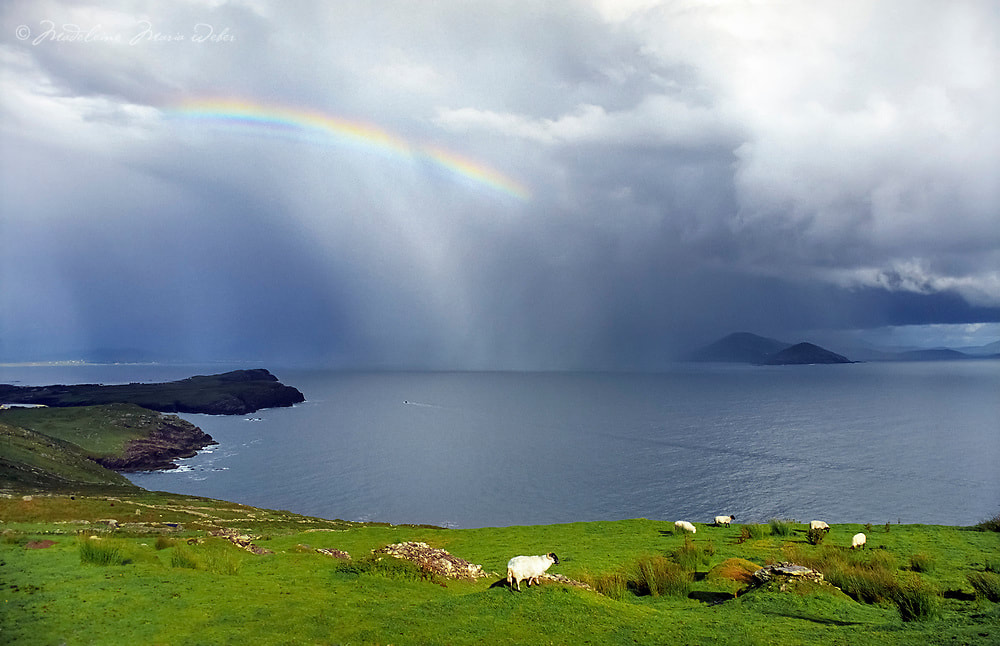
​Yellow mustard blooms Near a field of sheep. Gentle Rain covers them all. |
|
|
|
​The sleepy monk seal Lifts her head; the March wind blows Sand from her whiskers. |


|
Circling
“The birds build their nests in circles Because theirs is the same religion as ours.†Black Elk (Oglala Lakota Medicine Man, 1863-1950)​I am blessed with a round window in my kitchen, I can wash my hands at the sink, And look, as through a kaleidoscope, At the shifting leaves of the oak, The bright oleanders, turning in the summer wind, The long feather-fingers of the eucalyptus. The red-headed woodpeckers, Strong searchers, find their food in the dark branches, Feed their children high in the deep green, And the circle of sky holds us all. ​ |
The imagery in this poem comes from California’s landscape, where I lived when I wrote it many years ago. But the circle is a universal symbol of completion and unity that occurs in every habitat, time period and culture, as Black Elk so wisely pointed out.
The Circle of Sky has been my refuge for the past year, and certainly one of my richest blessings has been the privilege of living in constant connection with the natural world.
|
​A yellow bird flits |
|

|
|
​In the still garden, |

|
​Among the moss and Gnarled branches, a purple Orchid emerges |
|

|
|
​Egrets form a line Above the whitecaps, flying Home in the pink dusk. |

|
​The March super moon |
|

|
|
​The parents drink beer While the children scream for joy On the waterslide. |

|
As the virus spreads, Families still come to the beach, Squealing in the waves |
|

|
|
​On Easter morning, Cardinals chirp in the new leaves; The trade winds return. |

The eight haiku above were written in March and April of 2020, before and after the pandemic arrived in Hawaii. They chronicle ordinary events as all of us slowly became aware that this virus was changing our lives in unexpected ways. Our final social event of 2020 was the third birthday party we hosted for Willa and her friends on March 14 at our beach home. Wayne and I have been caring for Willa since her birth, and as she turns four this month, she will have spent a quarter of her life waiting for “the sickness†to go away. Our birthday gift to her last year was an inflatable waterslide, a source of unbelievable joy to her and her many little friends, none of whom she has seen since. The big event our country is hoping for on Willa’s birthday this year is the passage of the Covid Relief Bill.
A year ago, if someone had told us that we would spend at least an entire year in isolation, sheltering at home and not touching another soul except the people we live with, we would have treated that ridiculous idea like the plot of a cheesy science fiction movie. But what if we had known and understood? Would we have looked for the blessings hiding behind this horror?
|
Starlight mingles with
The bare branches; in the grass Near the sea, a toad. |
|

​
|
|
|


|
|
​After the downpour, Shells scatter the beach; sand crabs Scurry on the rocks. |

|
|
|


During this past year, I have joined a monthly (every second Tuesday) virtual poetry reading with the Union Poets, originating in the state of Washington. This open microphone event is hosted by the prolific poet and author, Sterling Warner, my former colleague at Evergreen Valley College. The poets who participate live all over the country, from Alaska to New York, New Mexico, Texas, Washington and Hawaii. We are an eclectic group, from a young schoolteacher in Alaska to an octogenarian journalist from Texas. One of the poets combines her poems with photography; another plays a native flute as we read her printed poems on our computer screens. We have formed a supportive little band, listening in respectful silence as each person shares a poem in turn.
At our most recent gathering in February, I was thrilled to greet, though virtually, two of my former students, whom I had not seen in years, Roohi Vora and Danny Le, invited by Sterling to join us. Roohi and Danny (who goes by the professional name Dandiggity,) have both evolved from college students to successful poets and professionals. Roohi is now an English Professor at San Jose State University where she has received the Lecturer of the Year award, and Danny is a librarian and dynamic performance poet who helps to organize artistic events in the Bay Area. Hearing them read their poetry among this distinguished group was more than music to my ears. The greatest reward for a teacher is to see her students succeed!
I have also had time, at last, to work on my other website: mybestpoetry.com. While it is still a work in progress and may never feel complete, this website contains a large collection of the poetry I have written over the years, organized into categories: Lyric Poetry, Dramatic Monologues, Haiku and a textbook called Finding the Poet. This text, all about poetry, is designed for students who want to learn to read, understand and appreciate poetry as well as for poets who want to learn more about their craft and to master the art form they have chosen. All of the readers of myteaplanner.com are more than welcome to peruse mybestpoetry.com at their leisure.
As you experience another March, still in lockdown mode, you will probably not be celebrating St. Patrick’s Day in a crowded Irish Pub drinking liberal amounts of beer, dancing a jig and listening to an Irish band with a penny whistle. But we can still honor our favorite Irish Saint, as everyone is Irish on St. Patrick’s Day. Why not enjoy the simplest of Irish meals at home with your loved one? Irish Brown Bread with Irish Vegetable Soup is as humble as a meal can be, but trust me, it is delicious.
​

​
- 1 ¾ cups all-purpose flour
- 1 ¾ cups whole wheat flour
- 3 tablespoons toasted wheat bran
- 3 tablespoons toasted wheat germ
- 2 tablespoons old-fashioned oats
- 2 tablespoons packed dark brown sugar
- 1 teaspoon baking soda
- ½ teaspoon salt
- 2 tablespoons (1/4 stick) salted butter, chilled
- 2 cups buttermilk
- 1 large egg
- Cooking spray for the loaf pan
Preheat oven to 425°F
Special equipment: food processor, 9x5x3 inch loaf pan, parchment paper, 1-quart glass measuring cup, wire cooling rack, wooden skewer or sharp knife, kitchen mitts, serrated knife
Makes: one loaf, approximately 8 servings, or about 12-15 2-inch scones
- Spray a loaf pan with cooking spray. Line the bottom and sides of the loaf pan with parchment paper cut to fit and spray the paper. Set aside. Combine the first 8 ingredients in the bowl of a food processor and pulse briefly to mix.
- Cut the chilled butter into small pieces, add them to the mixture in the food processor and pulse briefly until the texture resembles fine meal.
- Add the buttermilk and egg to a 1-quart glass measuring cup, whisk briefly to combine, and add to the mixture in the food processor. Pulse until a soft dough is formed.
- Remove the dough and quickly shape it into a loaf, pressing it into the prepared loaf pan. Bake until the bread is dark brown, and a wooden skewer or a sharp knife inserted into the center comes our clean, about 40 minutes. Using kitchen mitts, carefully remove the loaf from the pan, remove the parchment and cool on a wire rack.
- Cut with a serrated knife and serve with Irish butter. The dough can also be rolled out and cut into scones with a 2†cookie cutter and baked for approximately 11 minutes on parchment-lined cookie sheets. Serve with Irish Vegetable Soup or for breakfast the next day, toasted with butter and orange marmalade.

​​
- 1 head of cauliflower
- 2 sweet yellow onions
- 3 leeks
- 4 potatoes
- 5 carrots
- 1 teaspoon kosher salt
- 1 teaspoon coarsely ground black pepper
- 1 bay leaf
- 1 teaspoon herbs de Provence, or 3-4 tablespoons of fresh herbs from the garden such as parsley and rosemary
- 2 tablespoons butter
- 1 quart of chicken or vegetable broth
Special equipment: large cooking pot with lid, paring knife, cutting board, immersion blender or potato masher
Makes: 6-8 servings
- Wash and chop all the vegetables into small pieces. Peel the potatoes if you wish, but peeling is not necessary. Keep the vegetables separate as you chop them. Cutting up the vegetables will take a while, but it is a simple process. Just make sure that the pieces are small; this will help them cook more quickly and evenly.
- Saute the chopped onions and leeks in the butter until softened. Add the chopped carrots and stir for a few minutes. Add the potatoes and cauliflower, then the broth and seasonings. Bring the mixture to a boil for a few minutes.
- Turn the heat to low and simmer, covered, for about one to one and a half hours, stirring occasionally. When the vegetables, especially the carrots, are very soft, remove the bay leaf and either mash the soup with a potato masher or puree it with an immersion blender. Serve immediately and refrigerate any leftovers.