
On the ferry to
Tahiti, everyone eats
A baguette sandwich.
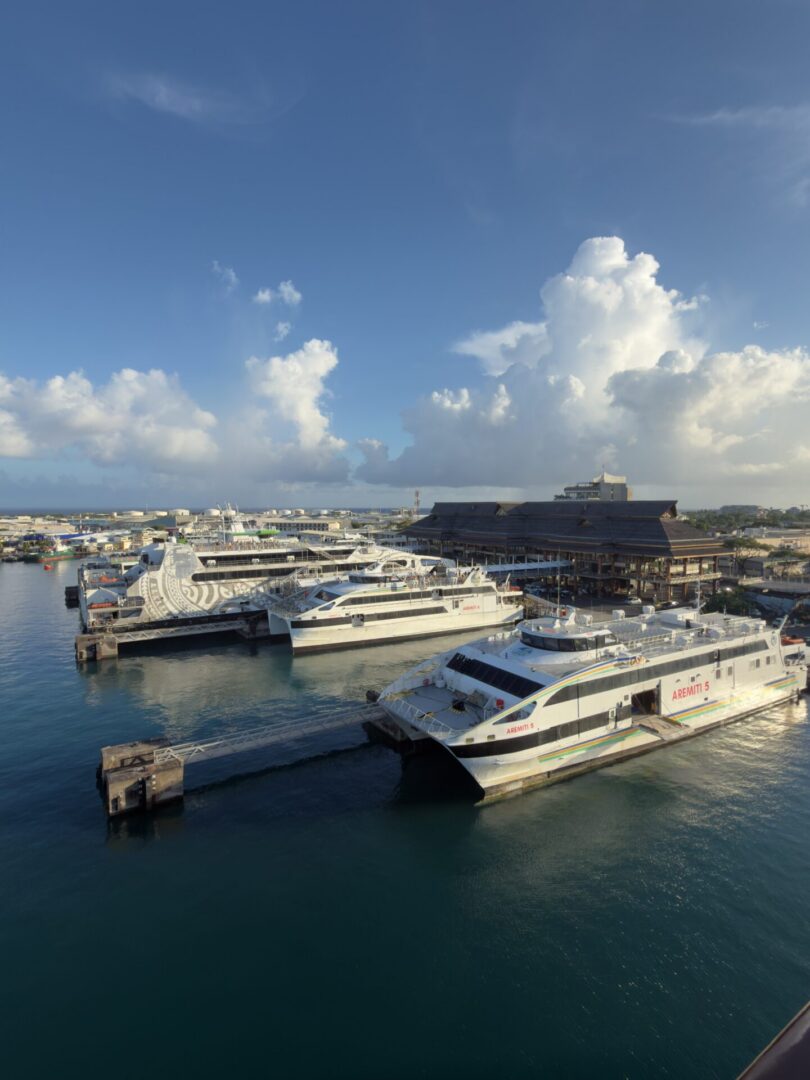
The city of Papeete on the Island of Tahiti was our final stop on our long ocean voyage from Honolulu to French Polynesia. We arrived on the ferry from the nearby island of Moorea, and we were surprised to see everyone on the ferry relaxing in the theatre-like seating and snacking on fresh baguette sandwiches from the snack bar. The baguette, as we learned, is a key element in the melding of the French and Polynesian cultures of this island chain.
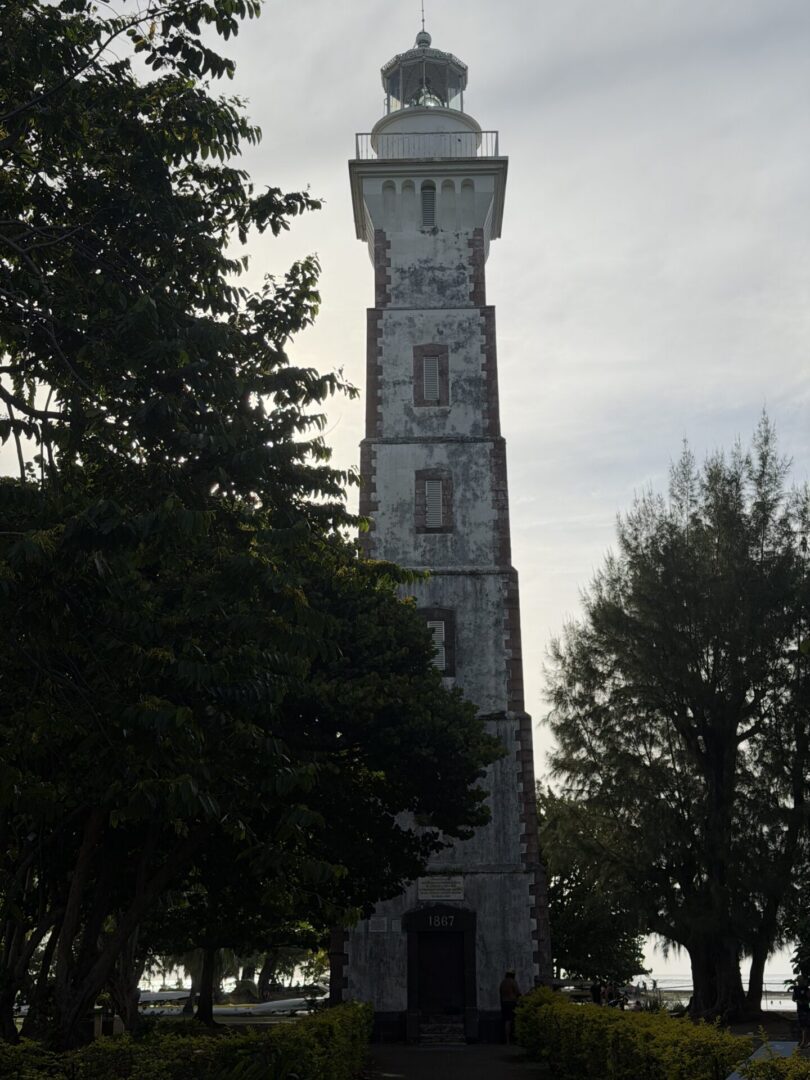
At the lighthouse where
Captain Cook landed, children
Play in the black sand.
As we know, the first explorers to visit Tahiti were Polynesian seafarers who traveled on large outrigger canoes from southern Asia perhaps via Fiji, Samoa and Tonga, to settle in Tahiti between 900 and 1100 of the Current Era. European explorers did not arrive until the 1500s, long after the Polynesian culture had been established in the islands. The Spanish and the Portuguese were the first Europeans to view Tahiti, followed by the English and the French, who engaged in a fierce rivalry about who should colonize these beautiful islands, rich in breadfruit and whales to be traded in other colonies, especially in the Caribbean. In 1767, the British Captain, Samuel Wallis arrived one year before the French explorer Louis-Antoine de Bougainville (for whom the beautiful tropical flower was named.) The famous British Captain Cook landed in Tahiti one year later and was ultimately killed on a beach after returning to Hawaii and attempting to kidnap a local chief. Captain Bligh of Mutiny on the Bounty fame also found his way to Tahiti, and after that Tahiti was inundated in the 1790s with British whaling ships and missionaries. And even Charles Darwin visited Tahiti in 1831.
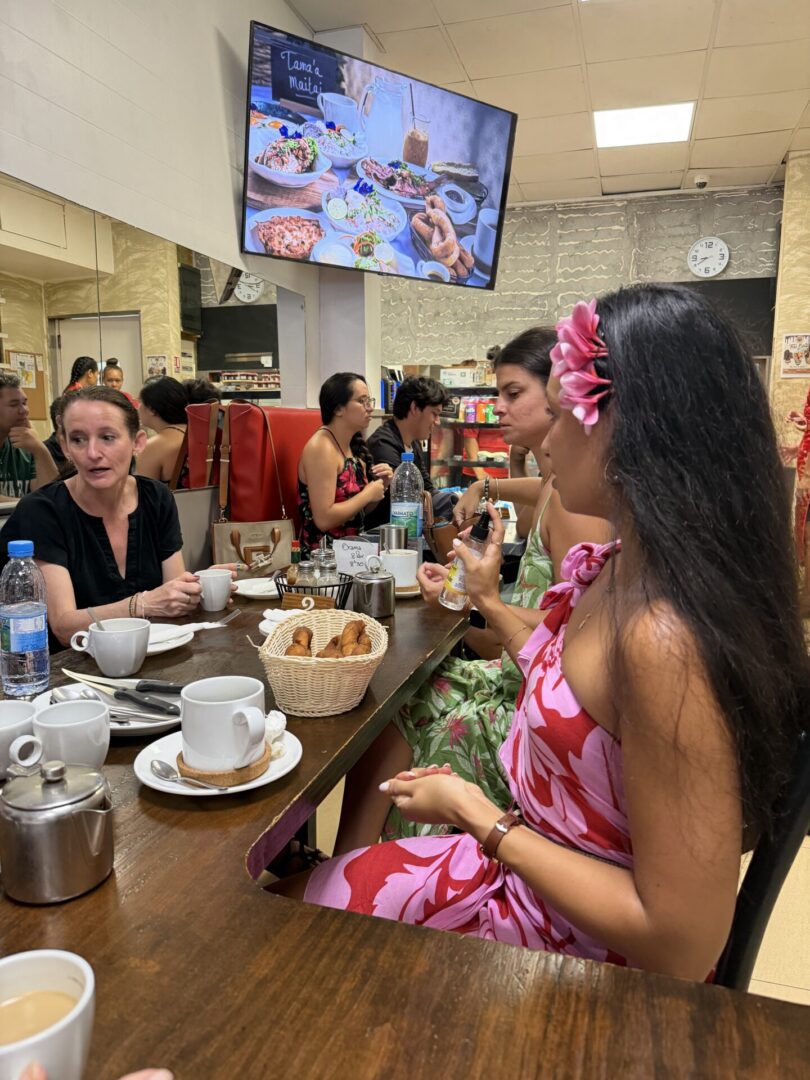
In the market in
Papeete, locals buy
Chow mein sandwiches.
By the mid-1800s, British and French tradesmen had established coffee and cotton plantations in Tahiti, and in 1865, more than three hundred Chinese laborers were imported from Hong Kong to work on the plantations. Today, 70 percent of the population of Tahiti remains Polynesian, while up to 9 percent is Chinese or people of mixed Chinese ancestry. Although the French are a small minority, they remain the “owners” of French Polynesia, having out-maneuvered the British in 1842 and taken over 121 islands in the South Pacific Ocean covering a 1,200-mile area.Four years later, this area, known to most of us today as Tahiti, became a “French Overseas Territory,” labeled French Polynesia and classified by the United Nations as a “non-self-governing territory,” and referred to by the French as an “overseas collectivity.” Today, the people of French Polynesia have French citizenship and the right to vote and to elect the President of French Polynesia. However, France controls the justice system, university education, defense, and all military and foreign affairs. Meanwhile French Polynesia controls its own primary and secondary educations systems, health, town planning and environmental issues. The official language is French, but we noticed that much of the population speaks Tahitian, and many of the residents of Papeete, especially those in the hospitality business, can speak English.
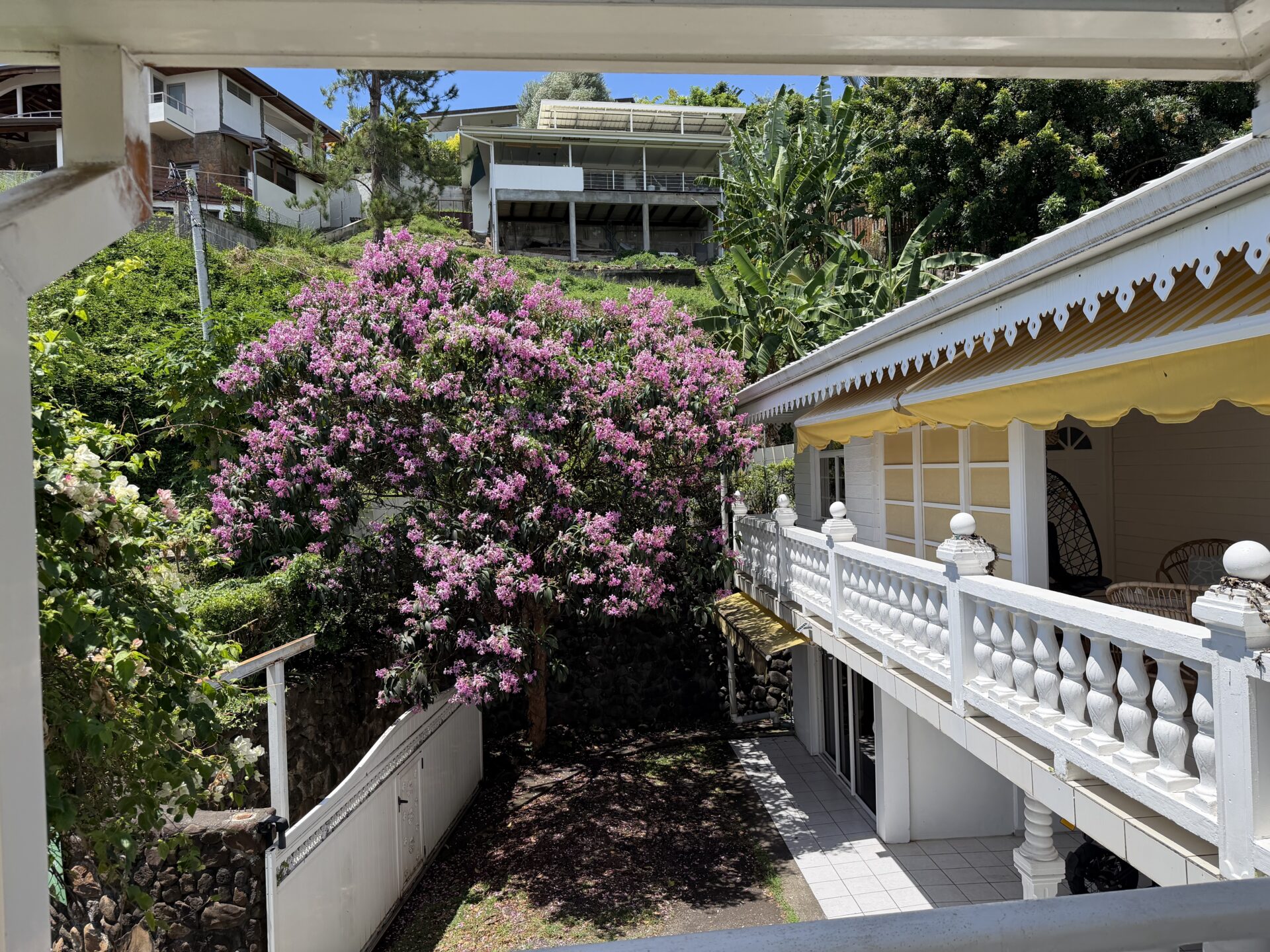
The sea breeze wafts through
The pink bougainvillea, high
Above the black sand.
During our week in Tahiti, many of the people we met were eager to discuss local politics with us, and the famous French Baguette, welcomed by the French Polynesians with open arms, was always a topic of conversation. I will remind you of all the passengers on the ferry gobbling up baguette sandwiches on their way to Papeete. And the Central Market is the go-to place for lunch, where the favorite is always a baguette stuffed with fresh tuna, cheese, egg salad, or perhaps chow mein, dripping with luscious noodles. What is political about a baguette?
Here is what we learned. There are two political parties in French Polynesia. One is Pro-French and the other is focused on Polynesian Independence. While there appears to be very strong support for independence within the seventy percent of the population who are Polynesian, France controls the economy. And France’s strongest tool is food! France subsidizes the food prices in the islands, especially the cost of a baguette, which is only about the equivalent of sixty cents in American money for a large, freshly baked loaf. How much do you pay for a fine quality loaf of bread at your local market? Food is power!
Food is also the first thing we think about when Wayne and I recall our magical week in Papeete, where French and Polynesian cuisine meet. We decided to stay at Maison Taina, a French style Air B&B in the foothills of the rain forest overlooking the city. Our hosts were a couple from France who prepared a French breakfast for us every morning as we gazed down the hillside toward the pink dawn, the sparkling black sand beaches and the green lagoon. The husband rose at 4 AM each morning to prepare our croissants, both dark chocolate and plain, served with butter, honey and jam along with just-baked French breakfast rolls, still warm. Our hostess prepared French-style strong coffee the minute we sat down and served us a plate of just peeled and sliced local tropical fruit, a different selection each day, including fresh pineapple, mango, papaya, passionfruit, bananas and other fruits, sweet and delicious but not all recognizable to us.
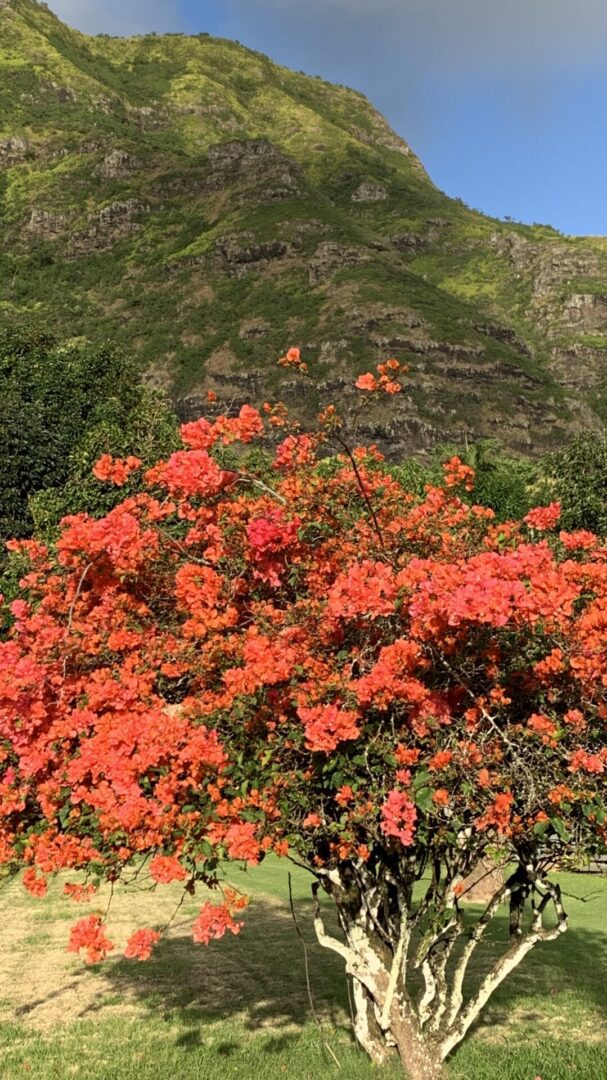
At the waterfall
Grotto, orange pagoda
Blossoms point upward.
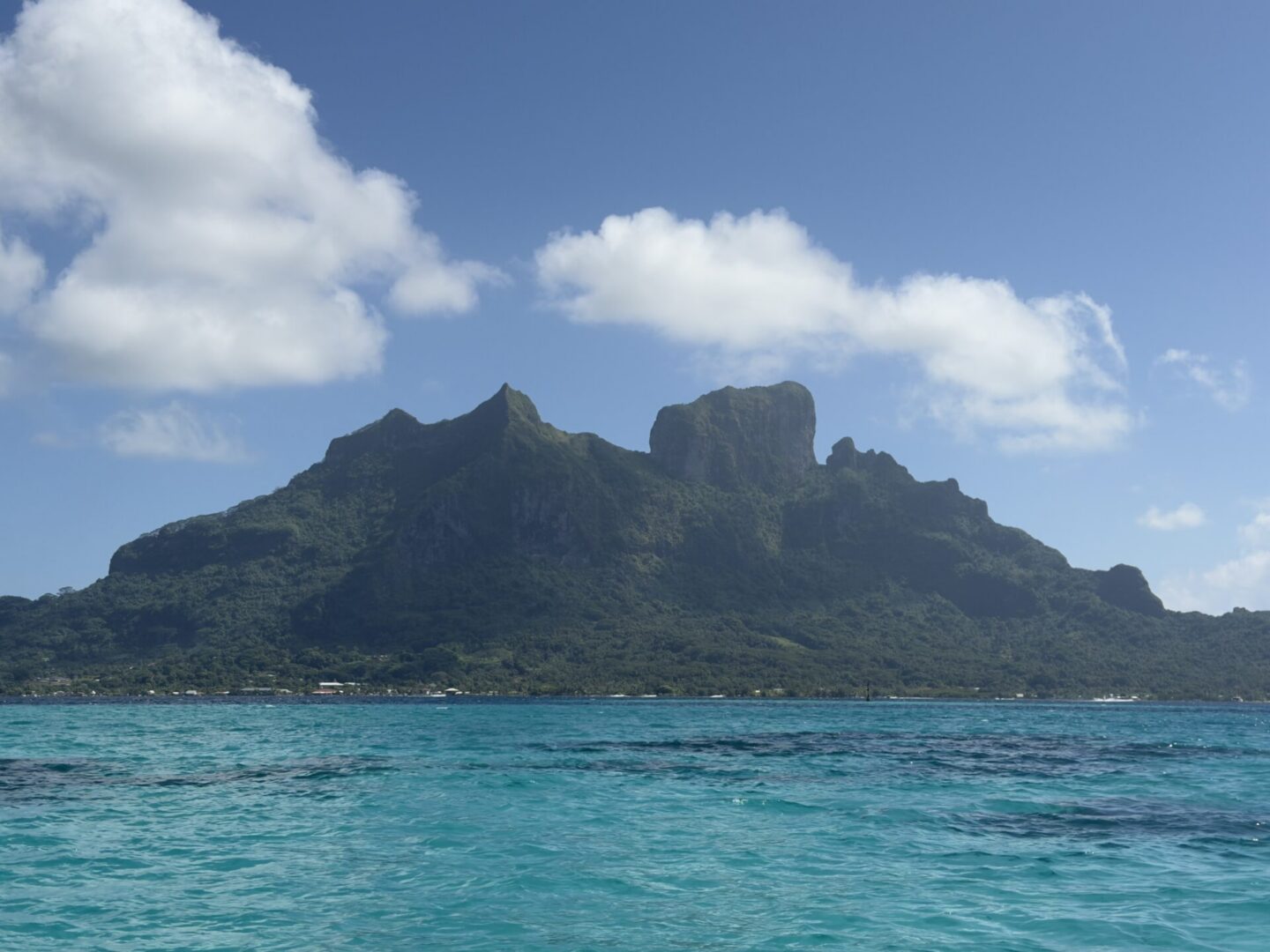
As we set out each day to explore, we discovered that Tahiti is a double island with two parts, Big Tahiti (Tahiti Nui) and Little Tahiti, (Tahiti Iti,) connected by an isthmus. Both the interior and coastal areas are clean, vibrant and filled with sparkling black sand beaches and rivers, volcanic mountains, rain forests, valleys, birds, flowers and waterfalls. Here we smelled the aroma of wild gardenias, the national flower, and visited a charming botanical garden, Vaipahi Water Gardens, (Jardin d’eau de Vaipahi) where a large group of wild chickens were living near a waterlily pond. Apparently these very friendly chickens had grown accustomed to being fed on pieces of fine Tahitian baguettes, and our guide had brought one along so as not to disappoint the wildlife. We learned that the pond was also populated by black eels who expected to be fed pieces of fresh baguette as well.
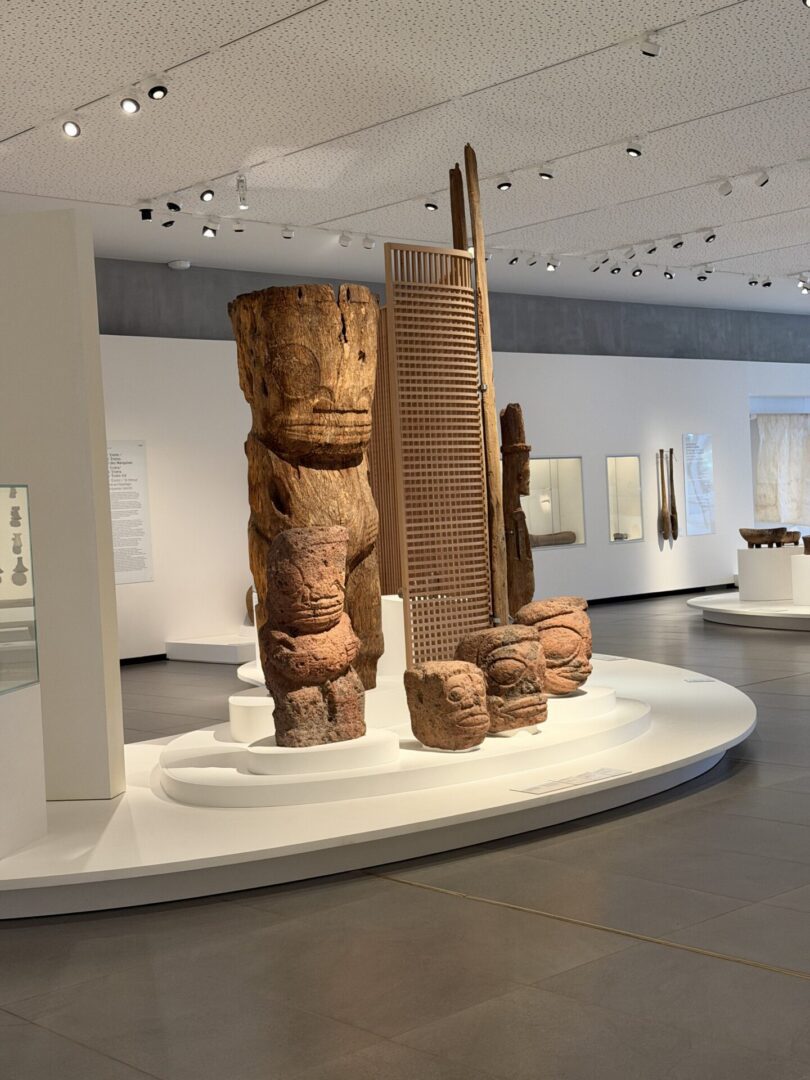
At the Museum
Of Tahiti, teenagers
Take notes in silence.
On the Big Island, outside the city of Papeete, the Musee De Tahiti et Ses Isles, (The Museum of Tahiti and Her Islands,) is worth a visit. New and beautifully designed within a botanical garden, this historical and anthropological museum is spacious, quiet and filled with important and well- displayed ancient Polynesian artifacts, from tools, pottery and jewelry to canoes, statuary and a magnificent traditional burial costume.
Back in the city, the Central Market Place (Marche,) near the Town Hall (Mairie) and the Cathedral (Place Notre Dame) became our favorite hangout, where we devoured our daily baguette sandwiches (fresh tuna and egg for me, chow mein for Wayne,) and did our shopping for gifts to take back home. This is the place to find the products for which Tahiti is famous: vanilla, coconut and black pearls. Tahitian vanilla is available in bottles of extract for cooking and as fresh vanilla beans, packaged in plastic and ready to store in your suitcase. Fragrant body lotions scented with coconut or wild gardenia are also easy to find in the market and make wonderful gifts, as they contain Tahitian coconut oil and coconut milk and are elegant skin moisturizers. Another popular gift from Tahiti is a colorful and easy to pack pareo, the traditional and versatile Polynesian wrap-around cloth, used as a beach cover-up, skirt or a tie-on dress, similar to a sarong. This garment is still widely worn by Polynesian women, and it also makes a festive tablecloth or curtain. But the big item to buy in Tahiti or any of the Polynesian islands is gray pearls, which are readily available in a variety of price ranges and quality levels at the Central Market.
Of course, we also took a foodie tour of Papeete, which included a deep dive into the astounding array of fruits, vegetables, fish, prepared foods, snacks and sweets that are available at the Central Market. Our guides were two gracious young women wearing bright floral pareo and adorned with gray pearl necklaces, bracelets and rings. At the market we tasted slices of fresh green mango sprinkled with Li Hing powder, a sweet, sour and salty flavoring of Chinese origin which is also very popular in Hawaii. Li Hing is made from ground dried plums pickled with licorice, sugar and salt. We were also treated to slices of coconut bread, sticky rice and chicken rolls and chunks of fresh pineapple and papaya.
Leaving the Market behind, our guides escorted us to a local restaurant for a Tahitian style family breakfast, starting out with locally grown coffee lightened with coconut milk. So delicious! We were also served fresh tropical fruit and the famous Tahitian breakfast pastry, Firi Firi. These are coconut flavored yeast doughnuts shaped as figure eights, perfect for dunking in coffee. But our big treat at breakfast was Tahiti’s favorite—Poisson Cru, the fabulous mixture of lime-marinated fresh tuna mixed with minced vegetables, all soaking in coconut milk! This is the national dish Wayne and I learned how to make during the cooking class we took in Moorea with Chef Stevenson. I shared this recipe in my August 2026 Blog, (It’s Travel Time Again.)
After breakfast we were off to a nearby Chinese style snack shop and bakery called “Lucky,” a family-owned establishment specializing in nostalgic old-school treats. These included empanada-like pastries filled with coconut cream, banana or tuna and sticky coconut cake, warm and caramelized on top.
For lunch, as if we weren’t already stuffed, our guides walked us over to Font de Mer, where the tuna boats dock, to a popular trendy café and bakery called Vini Vini Fish N’ Chill. A local family owns several of these upscale snack shops throughout the city. Vini Vini’s specialties include raw tuna preparations similar to the famous poke in Hawaii, sushi, tuna tarts, tuna burgers, French pastries and cocktails. We snacked on raw tuna served on slices of the ever-popular baguette and an over-the-top tuna burger served in a bowl to keep the various ingredients from falling all over the table. This included a fabulous fresh brioche roll filled with a large piece of tuna, coated with corn flakes and grilled until rare, then topped with caramelized onions, lettuce and tomato.
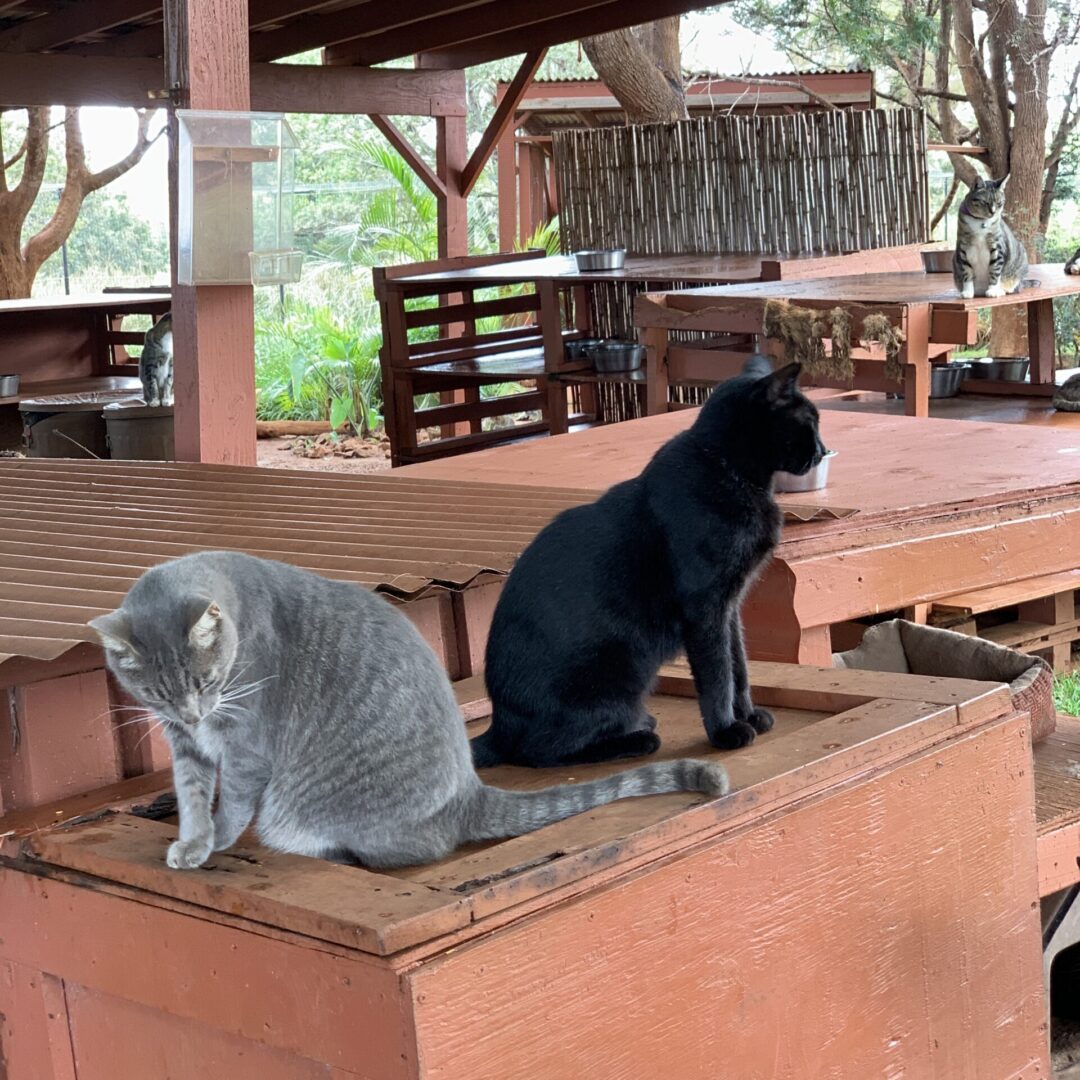
Two cats relax on
The patio where tourists
Eat freshly caught fish.
After our tuna fix, our guides took us to a liquor store that specializes in local products. Here we were urged to taste pineapple vodka and lychee rum. Then off we went for dessert where we ordered amazingly refreshing unsweetened fresh limeade. This lovely beverage was not sour at all, so we concluded that the Tahitian limes, used extensively to create sushi and Poisson Cru, must be much sweeter than the limes available elsewhere, including Hawaii. Oddly, we did not see a single lemon in any of our Polynesian adventures. Coconut, lime and vanilla are the go-to local fruits and flavoring for dessert in Tahiti. Our choices were coconut or vanilla ice cream, and we chose coconut, which was divine, but I am guessing that vanilla was just as good.
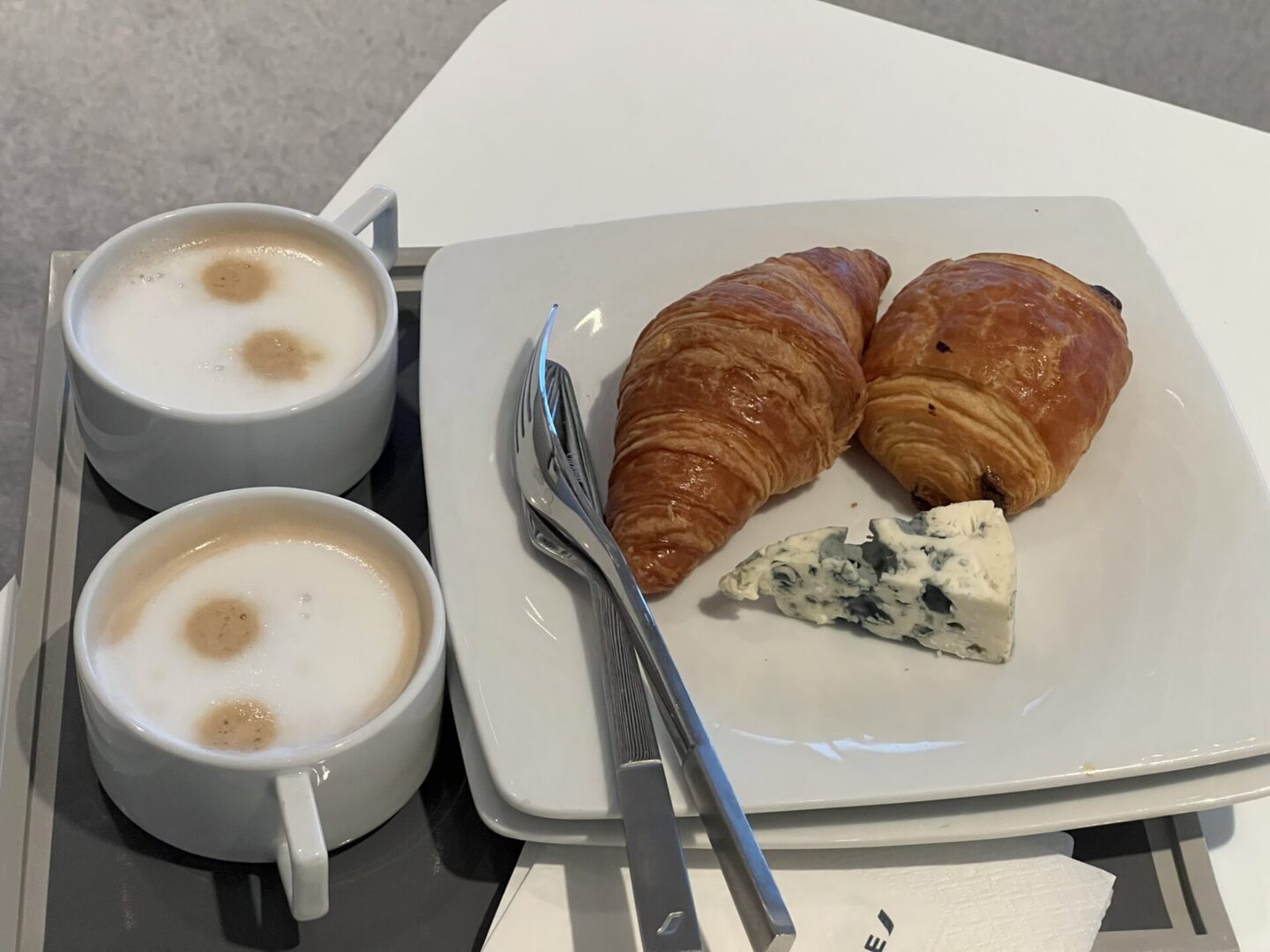
We relish our last
Chocolate croissants and the scent
Of wild gardenias.
As our restful and healing journey to Tahiti came to an end, we were grateful for the opportunity to experience a country that has so graciously integrated three different cultures—Polynesian, French and Chinese into a melding of aesthetics, values and cuisine in one of the most beautiful and environmentally pure places on earth.
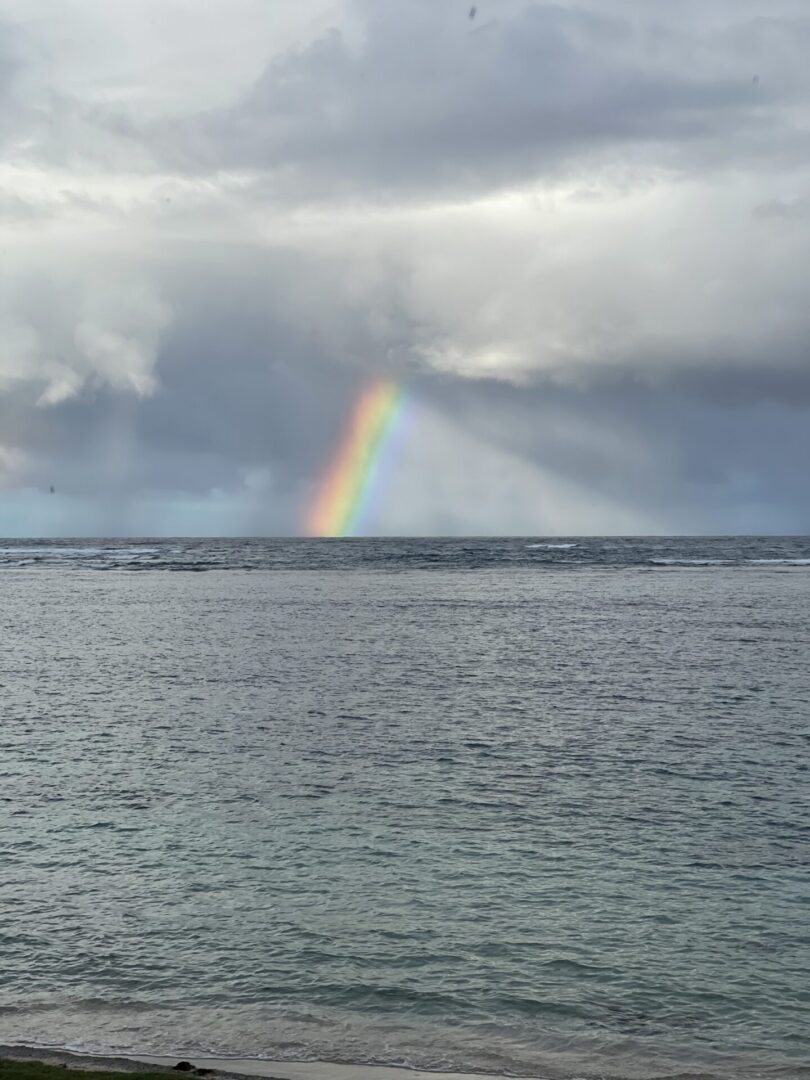
On our last night in
Tahiti, a thunderstorm,
Lightning and clean rain.
As my parting gift to you, I am happy to share a Tahitian breakfast item that marries the Polynesian and French culinary traditions: Omelette Tahitienne
Tahitian Omelette Tahitienne
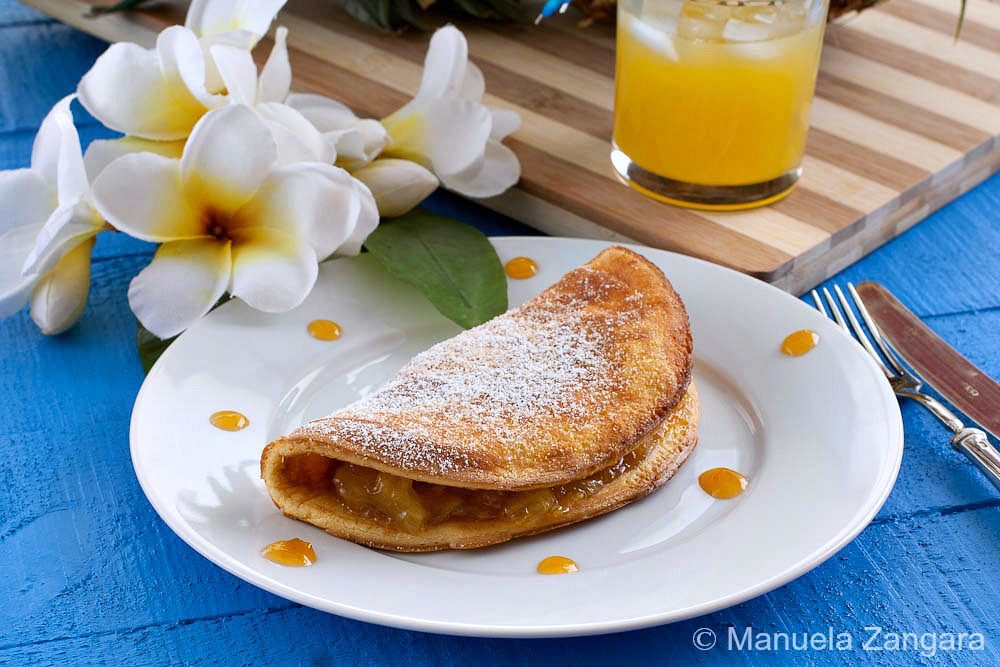
Almost everyone loves eggs for breakfast, and this sweet, French style omelet blends perfectly with the traditional Polynesian breakfast of Coffee with Coconut Milk, Firi Firi doughnuts, fresh fruit and Poisson Cru. You can find this easy recipe on the Manu’s Menu website, https://www.manusmenu.com/omelette-tahitienne. This recipe includes a sweet, cooked filling for the omelet comprised of fresh slices of pineapple, apricot jam and maraschino cherry syrup. I have adapted this recipe to allow you to choose any tropical jam or preserves that would appeal to your family. I recommend serving this omelet with fresh pineapple chunks. Many grocery stores sell pre-cut fresh pineapple chunks, which will save you the trouble of buying and cutting up a fresh pineapple.
Special Equipment:
Medium mixing bowl, hand held electric mixer, large mixing bowl, rubber spatula, large skillet, wide metal spatula, metal baking sheet, small sieve, four decorative serving plates
Serves: 4 servings